
Why We Love This Coffee
Wush Wush! There’s been a lot of hype about Wush Wush over the past few years so we’re particularly excited to be offering this lot. Wush Wush is a rare Ethiopian heirloom variety named for where it came from: Wushwush, a small area in the southwest of Ethiopia near Jimma and Sidamo. Though rare, the Wush Wush variety is actually quite good in terms of potential production yield, as well as tolerance to drought, heavy rains, hot weather, and cold nights. Sadly, it is susceptible to coffee leaf rust. We’ve featured a Wush Wush from the actual Wushwush region of Ethiopia before, but this is our first offering of the variety from Colombia. The rich volcanic ash, ideal temperatures, and perfect amount of rainfall in Cauca really make this coffee shine. Of course you are going to get some pretty obvious fruit notes due to the anaerobic fermentation, but this coffee is very clean and has some beautiful nuanced flavors including black currant, grapefruit, pear, hibiscus, chamomile, and brown sugar.
Water Recommendation:
Full-strength Third Wave Water gives a rich, sweet cup with excellent acidity and origin character. The black currant note leans more towards blackberry with this water.
Half-strength Third Wave Water (65ppm GH, 20ppm KH), which is nearly identical to Lance Hedrick’s Light & Bright water (60ppm GH, 25ppm KH), gives a much more acid-driven cup profile that somewhat lacks sweetness and complexity, at least in comparison to full-strength TWW. The black currant note presents more as underripe black currant.
Rao/Perger water (90ppm GH, 42ppm KH) gives an excellent flavor profile that was just slightly less sweet compared to full-strength Third Wave Water, but perhaps slightly more nuanced. This water gives the florals the most complexity.
Philadelphia water (Baxter water supply) filtered with a three-stage carbon system with a little softening (somewhat similar to what a Brita pitcher would do) also gives an excellent cup profile, very similar to Rao/Perger water, but there is a little more of a hint of generic “brown” coffee flavor.
If this is all very confusing—check out our blog post on water for coffee!
From Our Importer:
The Wush Wush variety is one of the most intriguing and rare coffee varieties in the world, celebrated for its extraordinary cup profile. Grown primarily in Colombia and Panama, this variety is believed to have made its way from Ethiopia around 30 years ago, specifically from the Wushwush region in the southwestern part of the country. Its journey from the birthplace of coffee to the lush mountains of Colombia has resulted in a coffee that is as unique as it is captivating.
Ethiopia is home to thousands of heirloom varieties, many of which have never been fully classified. Wush Wush is thought to be one of these heirloom varieties, brought to Colombia by coffee researchers or farmers seeking to experiment with new genetic material.
In Colombia, Wush Wush found a new home in the country’s rich volcanic soils and ideal microclimates. However, it remains a rare and niche variety, cultivated by only a handful of farmers since this coffee has low yields so this variety represents high costs to maintain, however care, time, and money invested show its real potential when cherries are harvested. Wush Wush is renowned for its floral, tea-like, and highly complex cup profile. When brewed, it offers a sensory experience that is unlike any other coffee.
Stature: medium | Average Altitude: 1600 – 2050 m.a.s.l. | Tolerant to drought, susceptible to leaf rust
Paola, along with her team of pickers, harvests only the ripest cherries. Then, the cherries are placed in the sorting area at Patio Bonito farm, where the sorting team hand-sorts and floats them to remove any low-density, underripe, or defective cherries.
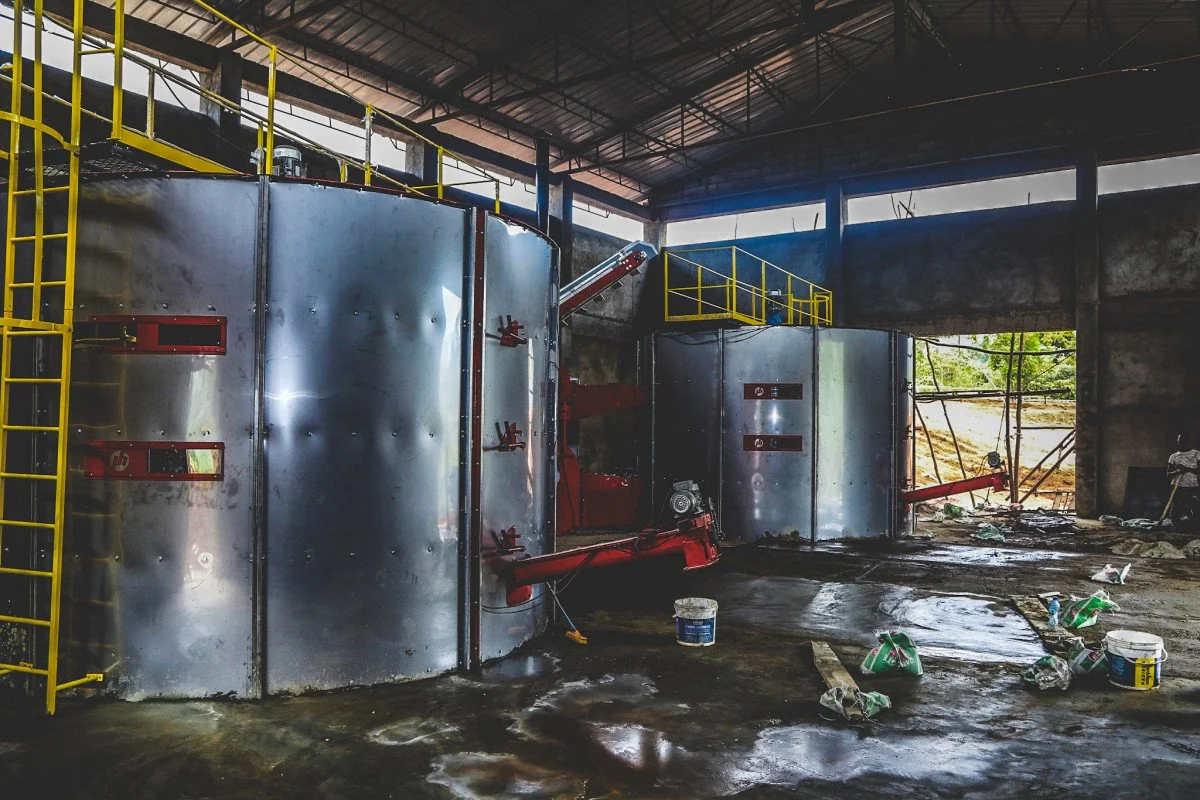
Once sorted, the cherries undergo a 32-hour anaerobic fermentation, a critical step that enhances the coffee's flavor profile. This controlled fermentation carried by Paola follows the Cofinet’s protocol, allowing the sugars, organic acids, and other compounds within the cherries to break down gradually, stimulating the development of a delicate yet interesting profile. The 32-hour fermentation period is carefully calibrated to balance flavor complexity and enhance sweetness. This results in a crispy and lively character.
After fermentation, the cherries are pulped, and the mucilage is thoroughly washed away. Afterwards, depulped coffee is placed inside tanks to ferment an additional 12 hours. Once fermentation is finished, coffees are spread out on raised beds. The team monitors them closely to ensure even drying and optimal quality. We aim for 9.5% -11% moisture content, which is the perfect point for us.